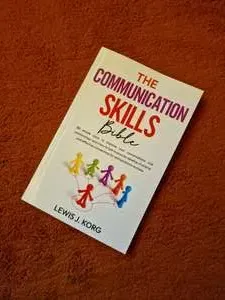
The Communication Skills Bible
Summary
"The Communication Skills Bible" delivers exactly what its title promises: a comprehensive collection of practical techniques to improve everyday conversations and strengthen relationships. Lewis J. Korg takes a refreshingly straightforward approach, organizing the book into 30 distinct communication skills that readers can implement immediately.
Unlike many communication books that focus heavily on theory, Korg emphasizes application through clear examples, real-world scenarios, and step-by-step guidance. Each skill is presented with its psychological foundation, common pitfalls, and practical exercises designed to build conversational competence through deliberate practice.
The book covers the full spectrum of communication challenges—from active listening and asking powerful questions to navigating difficult conversations and expressing needs assertively. What sets this guide apart is its accessibility; complex communication concepts are distilled into actionable techniques that work across personal and professional contexts.
Key Takeaways
1. The 3-Second Pause Technique
Intentionally pausing before responding creates space for more thoughtful communication and prevents reactive responses during emotional conversations.
2. Precision Questioning Framework
Asking the right questions in the right sequence dramatically improves information gathering and problem-solving conversations.
3. Empathic Reflection
Demonstrating understanding before offering solutions builds trust and opens others to your perspective, particularly in conflict situations.
4. Intention-Impact Gap Awareness
Recognizing that what we intend to communicate often differs from its impact helps prevent and resolve misunderstandings.
5. Communication Environment Design
Creating the right physical and psychological conditions for important conversations significantly improves outcomes.
Favorite Quotes
Personal Reflection
As someone who's read numerous communication books, I approached "The Communication Skills Bible" with moderate expectations, assuming it would cover familiar ground. I was pleasantly surprised by both its practicality and its ability to present established concepts in fresh, immediately applicable ways.
The "Precision Questioning Framework" has been particularly valuable in my professional life. Before reading this book, my question patterns were haphazard, often leading to meandering conversations. Using Korg's structured approach—moving from open exploration questions to narrowing clarification questions to action-oriented questions—has made my meetings noticeably more efficient.
In my personal relationships, the "Intention-Impact Gap" concept helped resolve a recurring conflict with my partner. Understanding that my intended meaning was consistently different from how my words were being received allowed us to develop clearer communication patterns rather than arguing about who was "right" about what was said.
While the book offers 30 techniques, I found the most value in focusing deeply on implementing just one skill per week rather than trying to transform my entire communication style at once. The book's modular structure supports this approach well, making it ideal for gradual but sustainable improvement.
Who Should Read This
This book is ideal for:
- Professionals whose success depends on clear, effective communication
- Managers looking to improve team dynamics and reduce misunderstandings
- Couples seeking to enhance their relationship through better communication
- Individuals who find themselves frequently misunderstood or in communication-based conflicts
- Those who prefer practical, actionable advice over theoretical concepts
- Anyone looking for a comprehensive reference guide to communication skills
- People who learn best through concrete examples and structured practice