A Product Manager’s Guide
Overview
In the evolving landscape of product development, understanding each team member’s role and responsibilities is critical to building successful products.
As a Product Manager (PM), you act as the conductor — aligning vision, execution, and collaboration across cross-functional teams.
By the end of this guide, you will:
- Identify and articulate the primary responsibilities of UX and UI designers.
- Differentiate between UX, UI, and Visual Design skill sets.
- Understand how to coordinate effectively with design, development, QA, marketing, and stakeholder teams.
- Learn how to foster motivation, resolve conflicts, and drive success through collaboration.
1. User Experience (UX) Design
What UX Designers Do
UX Designers lead user-centered design efforts, focusing on usability, functionality, and intuitive interaction.
Their goal: ensure every interaction feels meaningful, efficient, and human.
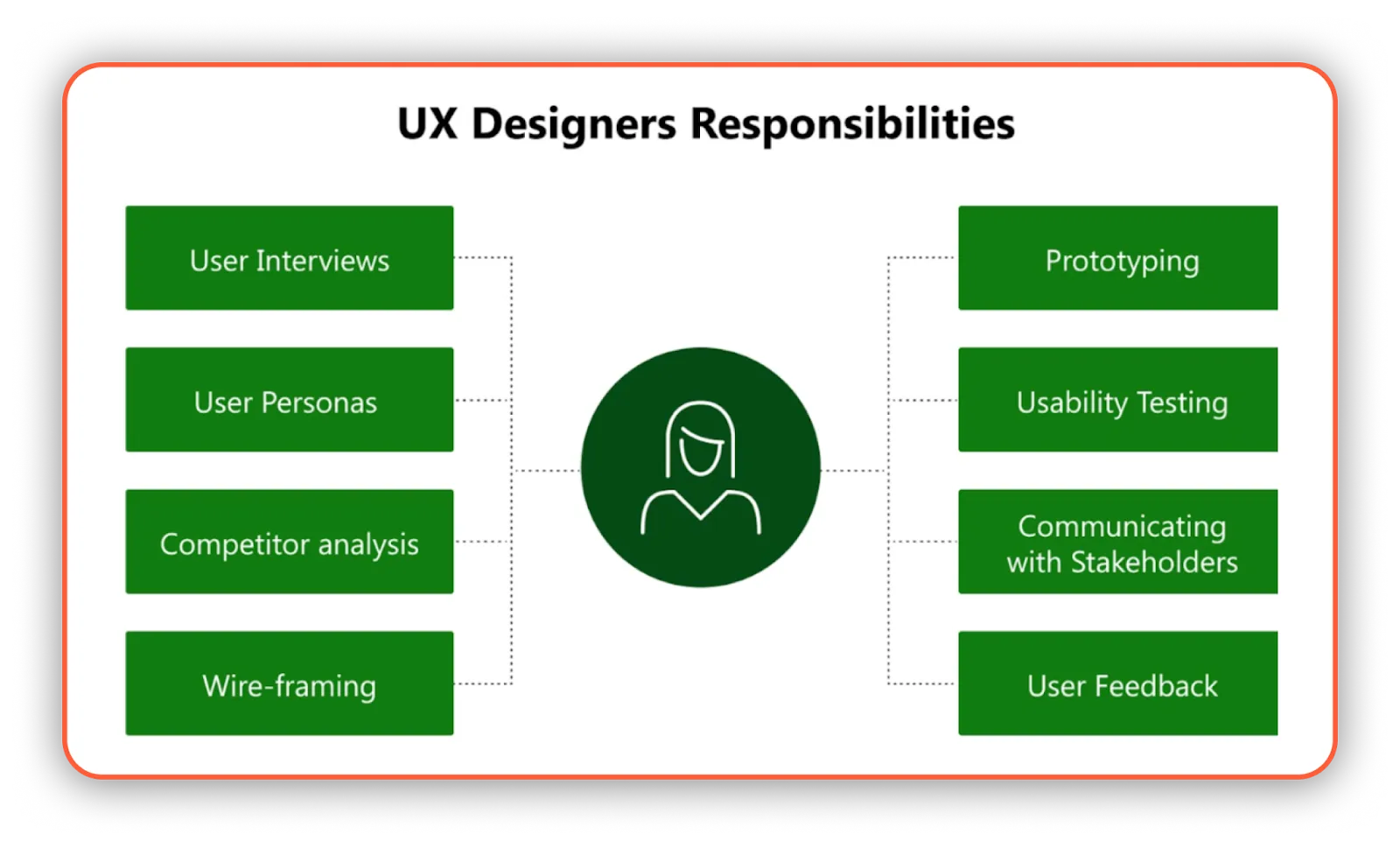
Core Responsibilities
- Conduct user interviews and usability testing
- Analyze behavioral data and pain points
- Create user flows, personas, and wireframes
- Develop prototypes and conduct iterative testing
- Collaborate with stakeholders for feedback alignment
Example:
A UX designer working on a data analytics platform may map out user flows that simplify complex dashboards, helping users interpret data more intuitively.
Key Deliverables
- 📄 User Flows – mapping each step of a user journey
- 👥 Personas – fictional yet data-backed user profiles
- 🧩 Wireframes – low-fidelity structural blueprints
- 🧪 Prototypes – interactive models for usability testing
Impact
UX Designers ensure that the product:
- Solves real user problems
- Minimizes friction and confusion
- Balances business goals with user satisfaction
2. User Interface (UI) Design
UI Designers transform wireframes into beautiful, interactive experiences.
They define visual style, consistency, and accessibility, ensuring that the interface is not just usable — but delightful.
Core Focus Areas
- Color palettes and typography aligned with brand identity
- Iconography, spacing, and hierarchy for clarity
- Responsive layouts for multiple devices
- Micro-interactions and animations to enhance engagement
Example:
A UI designer working on a logistics app might define a color-coded system for tracking shipments — instantly communicating status through intuitive visuals.
Tools Commonly Used: Figma, Adobe XD, Sketch, InVision
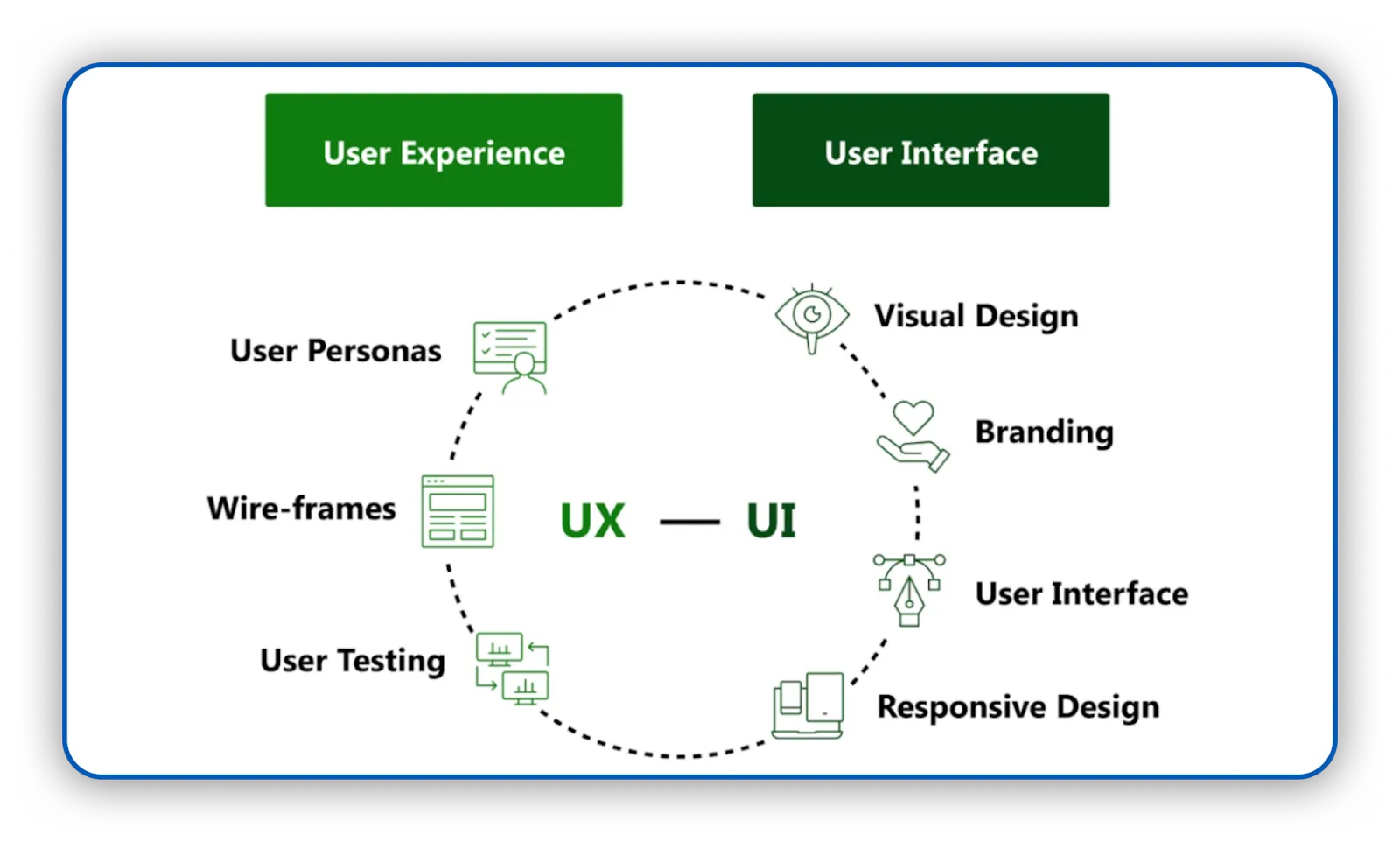
UX vs UI: The Connection
| UX Design | UI Design |
|---|---|
| Focuses on user flow and experience | Focuses on visual layout and interaction |
| Research-driven | Aesthetic-driven |
| Wireframes, prototypes, personas | Color, typography, iconography |
| Determines how it works | Determines how it looks |
Both work together — UX defines the structure; UI brings it to life.
3. Visual Design and Brand Strategy
Visual design translates brand identity into sensory experiences that evoke emotion and recognition.
Key Elements
- 🎨 Color Psychology – Blue (trust), Green (calm), Red (energy)
- 🔤 Typography – Serif (classic), Sans-serif (modern)
- 🖼 Imagery – Authentic, minimalist, or vibrant based on brand tone
- 💫 Consistency – Across all touchpoints for stronger brand recall
Example:
A SaaS product using bold geometric shapes and vibrant colors signals innovation and reliability.
Visual design = Emotional storytelling + Brand differentiation + User trust.
4. Product Management and Team Coordination
PMs orchestrate all moving parts:
- Set clear vision and strategy
- Define goals, metrics, and timelines
- Facilitate cross-functional collaboration
- Conduct regular check-ins for progress and morale
Strong coordination helps every team member understand how their work contributes to the larger picture.
5. Motivation, Recognition, and Performance Tracking
High-performing teams thrive on motivation and recognition.
- Celebrate individual and team achievements
- Use milestone dashboards to visualize progress
- Offer constructive feedback regularly
- Keep discussions transparent and outcome-oriented
6. Conflict Resolution and Stakeholder Collaboration
When Conflicts Arise
Differences are natural — for example:
- UX may prioritize functionality
- UI may emphasize visual appeal
Product Manager’s Role
- Facilitate open dialogue
- Listen to all perspectives
- Use data to ground decisions
- Seek integrative (not compromising) solutions
With stakeholders, PMs mediate competing visions by:
- Gathering facts and context
- Presenting insights with objective data
- Aligning everyone around shared goals
Conflict → Collaboration → Stronger outcomes.
7. Design & Development Collaboration
Designers conceptualize ideas; Developers bring them to life.
- Early collaboration ensures feasibility and efficiency
- Shared tools (Figma → React components) reduce rework
- Engineers provide technical feedback during design
- Agile ceremonies like sprint planning bridge both sides
Developer Roles
- Front-end: Interface and interaction logic
- Back-end: Data, APIs, and server-side logic
- Full-stack: Both ends, common in lean teams
8. Quality Assurance (QA) and Testing
QA ensures the product works as intended — securely and reliably.
Key Practices
- Write and execute test plans
- Perform manual and automated tests
- Log bugs via CI/CD pipelines
- Validate fixes and performance metrics
Quality is a team responsibility, not a final step.
9. Technical Writing and Documentation
Technical writers create resources that empower users and internal teams alike.
Types of Documentation
- User manuals & onboarding guides
- Knowledge bases & FAQs
- API documentation for developers
Good documentation = fewer support tickets + faster adoption.
10. Marketing and Product Launch
Marketing converts features into stories.
Core Activities
- Define target audiences and messaging
- Build campaigns (videos, emails, social media)
- Develop case studies and whitepapers
- Measure engagement via analytics tools
Launch success depends on coordination between PM, Marketing, and Sales.
11. Stakeholder Engagement and Feedback Loops
PMs keep stakeholders informed and aligned through:
- Regular progress reports
- Product roadmaps & dashboards
- Data-driven presentations
Continuous feedback ensures transparency, trust, and shared ownership.
12. Agile Development Practices
Agile supports iterative improvement and collaboration.
Key Frameworks: Scrum, Kanban
Roles:
- Product Owner – prioritizes work
- Scrum Master – facilitates process
- Dev Team – executes tasks
Short sprints, retrospectives, and daily stand-ups ensure flexibility and learning.
13. DesignOps & DevOps
- DesignOps scales design systems, tools, and workflows
- DevOps automates deployment and testing for reliability
Both aim to reduce silos, improve collaboration, and accelerate delivery.
14. Customer Success & Post-Launch Support
Support teams ensure users achieve desired outcomes through:
- Onboarding and training
- Issue resolution
- Collecting user feedback for improvements
Their insights directly shape future product iterations.
15. Accessibility, Inclusivity, and Ethics
Inclusive design benefits everyone.
Core Principles
- Meet WCAG accessibility standards
- Ensure color contrast, keyboard navigation, and screen reader compatibility
- Protect user data and privacy
- Consider global and cultural inclusivity
Ethical, accessible products foster trust and long-term loyalty.
16. Integrating AI and Emerging Technologies
AI and ML are transforming product development.
PM’s Responsibility
- Understand AI’s potential and limitations
- Ensure responsible and transparent usage
- Balance automation with human empathy
Cross-functional collaboration ensures AI enhances — not replaces — user value.
17. Measuring Success and Continuous Improvement
Quantitative Metrics
- Retention rate
- Conversion rate
- Feature adoption
- NPS (Net Promoter Score)
Qualitative Feedback
- User interviews
- Open-ended surveys
- Usability testing
Combine data and human insights to understand both what is happening and why.
18. Embracing Feedback-Driven Design
Feedback is a growth engine — for both product and team.
- Use surveys, interviews, and support channels
- Conduct regular retrospectives
- Encourage transparency and learning
Continuous feedback → Continuous improvement.
19. Navigating Global Collaboration
Distributed teams are now the norm.
Best Practices
- Use asynchronous communication tools (Notion, Slack, Miro)
- Maintain detailed documentation
- Respect time zones and cultural differences
- Foster empathy and trust across borders
Diversity drives creativity and resilience.
Conclusion
A successful product manager doesn’t just manage tasks — they understand people.
By learning the roles, motivations, and collaboration patterns within your team, you enable synergy, innovation, and sustainable success.
“Products succeed not just because of great strategy, but because of great teamwork.”
Key Takeaways
- Understand roles → Build empathy
- Communicate clearly → Build trust
- Iterate continuously → Build better products
- Celebrate success → Build motivation
🏷 Recommended Tags
#ProductManagement #TeamCollaboration #UXDesign #UIDesign #Leadership #Agile #DesignOps #DevOps #UserResearch
📚 Suggested Reading
- Inspired by Marty Cagan
- Lean UX by Jeff Gothelf
- The Design of Everyday Things by Don Norman