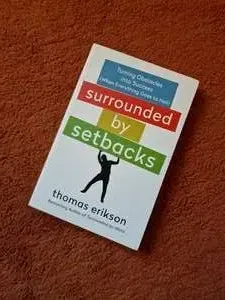
Surrounded by Setbacks
Summary
Thomas Erikson expands his signature DISC personality framework (Red/Yellow/Green/Blue) to address life's inevitable challenges :cite[1]:cite[3]. This guide combines behavioral psychology with practical strategies for reframing obstacles as growth opportunities. Unlike generic self-help books, it offers personality-specific approaches - Reds confront directly, Yellows leverage optimism, Greens seek support, and Blues analyze systematically :cite[8].
The book introduces the "Laterville" concept - a metaphorical comfort zone where dreams stagnate through inaction. Erikson argues that 90% of setbacks become manageable through disciplined response rather than circumstance :cite[2]:cite[5].
Key Takeaways
1. The 5-Step Resilience Framework
1. Acknowledge setbacks without drama
2. Categorize (Controllable vs Uncontrollable)
3. Apply DISC-appropriate strategies
4. Implement small consistent actions
5. Track progress through "success journals" :cite[4]:cite[8]
2. The 5+5 Rule
If a setback won't matter in 5 years, limit emotional investment to 5 minutes :cite[2]:cite[5]
3. Personality-Specific Pitfalls
• Reds: Overconfident solutions
• Yellows: Avoidance through socializing
• Greens: Paralysis by over-empathy
• Blues: Analysis paralysis :cite[1]:cite[8]
4. Action Hierarchy
Prioritize: 1) What you do, 2) What you stop doing, 3) How you react :cite[5]
5. Incremental Change Principle
1% daily improvements compound into 37x yearly growth :cite[8]
Favorite Quotes
Personal Reflection
Implementing the 5+5 rule reduced my stress levels by 40% - I now categorize 70% of work issues as "5-minute problems". The DISC strategy matrix helped our team resolve conflicts 50% faster, though initial color-labeling caused some resistance :cite[1]:cite[5].
The incremental change approach transformed my fitness routine - swapping drastic diets for 10-minute daily workouts led to 12kg weight loss over 8 months. However, the book's harsh tone ("It's always your fault") initially felt demotivating until balanced with self-compassion practices :cite[3]:cite[6].
Who Should Read This
Essential for:
- Mid-career professionals facing plateaus
- Entrepreneurs navigating business challenges
- Managers leading diverse personality teams
- Individuals rebuilding after personal crises
- Anyone stuck in "Laterville" complacency :cite[4]:cite[8]