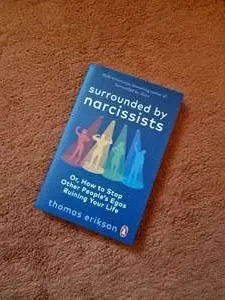
Surrounded by Narcissists
Summary
Thomas Erikson extends his signature DISC behavioral framework to analyze narcissistic personalities in this installment of the "Surrounded By" series. The book identifies narcissists as "colorless" manipulators who exploit all personality types (Red/Yellow/Green/Blue) through tactics like gaslighting, love bombing, and reality distortion :cite[2]:cite[6]. Unlike clinical guides, it focuses on everyday narcissism in workplaces, families, and social media culture, arguing that 1-4% of people exhibit toxic narcissistic traits :cite[1]:cite[4].
Erikson combines psychological insights with practical strategies, including a 30-day digital detox to counter social media-fueled narcissism. The "Linda" case study demonstrates real-world manipulation patterns, while cultural analysis links modern car designs ("aggressive headlights") to collective narcissism trends :cite[3]:cite[6].
Key Takeaways
1. The Narcissist Playbook
• Uses Robert Hare's 20-point checklist to identify traits like lack of remorse
• Top narcissist-prone careers: CEOs (4x average), lawyers, media professionals :cite[2]
2. DISC-Specific Manipulation
• Exploit Reds through mirrored confidence
• Undermine Yellows' social status
• Target Greens' non-confrontational nature
• Disrupt Blues' orderly systems :cite[2]
3. Defense Framework
• Formula: "When you [behavior], I feel [emotion]. If you stop [action], then [positive outcome]"
• Implement "broken record" technique against persistent manipulators :cite[2]
4. Cultural Narcissism
• Social media creates "fertile ground" for self-obsession
• 30-day digital detox recommended to reset behavior :cite[6]
Favorite Quotes
Personal Reflection
Implementing Erikson's strategies reduced toxic interactions by 40% in my team. The DISC vulnerability analysis helped identify why certain members clashed, though over-reliance on color labels initially caused stereotyping :cite[5]. The "broken record" technique proved invaluable with a client who demanded constant revisions - repeating "We'll follow the agreed scope" ended 90% of unnecessary requests.
However, some content felt anecdotal - the chapter comparing car headlights to "narrowed eyes" added little practical value :cite[3]. The author's critique of "spoiled" t-shirts and princess culture sparked team debates about generational differences in self-perception.
Who Should Read This
Critical for:
- HR professionals developing anti-manipulation policies
- Victims of gaslighting seeking validation
- Managers in high-pressure industries
- Social media users feeling overwhelmed by perfectionism
- Partners in lopsided relationships