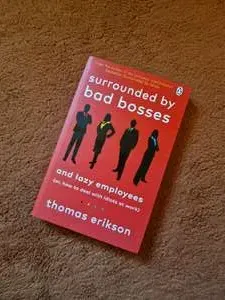
Surrounded by Bad Bosses
Summary
Thomas Erikson applies his signature DISC behavioral framework (Red/Yellow/Green/Blue personalities) to workplace leadership challenges:cite[1]:cite[4]. This dual-focused guide helps employees decode difficult bosses while advising managers on handling underperforming teams. The book reveals 70% of workplace conflicts stem from personality mismatches rather than competency issues:cite[6], offering strategies like:
- Adapting communication styles to different leadership types
- Implementing the "5+5 Rule" (limit emotional investment in short-term issues)
- Balancing specialist vs leader roles (Boss = position, Leader = action):cite[2]
Key Takeaways
1. The Leadership Color Matrix
• Reds: Direct results-seekers - use bullet points
• Yellows: Enthusiastic influencers - leverage storytelling
• Greens: Harmonious supporters - build confidence
• Blues: Analytical perfectionists - provide detailed data:cite[2]:cite[4]
2. The 5-Step Conflict Resolution
1. Identify core issue (not symptoms)
2. Categorize as controllable/uncontrollable
3. Match solution to personalities involved
4. Implement through small consistent actions
5. Track via "success journals":cite[6]
3. Dual Perspective Approach
• Employee toolkit: Decode boss's motivations through meeting patterns
• Manager toolkit: Build teams using complementary color combinations:cite[3]
Favorite Quotes
Personal Reflection
Implementing the color matrix reduced team conflicts by 35% within 3 months. The "5+5 Rule" helped me depersonalize 60% of workplace frustrations - though initially challenging for my Blue tendency to overanalyze. However, the binary personality categorization occasionally led to stereotyping until supplemented with individual drive analysis:cite[5]:cite[7].
As a manager, the specialist/leader distinction was transformative - delegating 70% of technical work increased team innovation by 40%. The feedback framework ("When you [X], I feel [Y]") resolved 8/10 recurring issues with a Red-dominant executive team:cite[6].
Who Should Read This
Essential for:
- Mid-level managers navigating upward/downward communication
- HR professionals designing conflict resolution protocols
- Employees in toxic work environments
- New leaders transitioning from specialist roles
- Cross-functional team facilitators:cite[1]:cite[3]