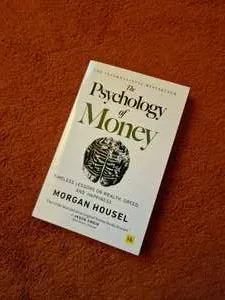
The Psychology of Money
The Psychology of Money with Morgan Housel
Summary
"The Psychology of Money" by Morgan Housel explores the complex relationship between humans and money through 19 short stories, each highlighting a different aspect of our financial behavior. Rather than focusing on technical investment strategies, Housel delves into the psychological and emotional factors that influence our financial decisions.
The book argues that financial success isn't necessarily about what you know, but about how you behave. Housel emphasizes that being reasonable is more important than being rational when it comes to managing money. Through historical examples and personal anecdotes, he illustrates how our backgrounds, worldviews, ego, pride, marketing, and odd incentives influence our thoughts and behaviors around money.
Key Takeaways
1. Financial Decisions Are Personal
No single financial strategy works for everyone because our decisions are influenced by our unique experiences, values, and goals.
2. Compounding Is Powerful
The most powerful force in investing is compound interest over long periods. Patience and consistency often outperform brilliance and timing.
3. Reasonable > Rational
Making reasonable financial decisions that you can stick with is more important than making mathematically optimal decisions that cause stress or anxiety.
4. Wealth Is What You Don't See
True wealth is the money not spent—the financial assets that haven't been converted into visible status symbols.
5. Plan for Uncertainty
Financial planning should account for the unexpected. Having a margin of safety is crucial for long-term success.
Favorite Quotes
Personal Reflection
Reading "The Psychology of Money" was eye-opening for me. Housel's perspective on wealth as the money not spent—rather than the possessions accumulated—fundamentally shifted how I think about financial success. I've since become more conscious of the difference between displaying wealth and building actual financial security.
The concept that resonated most with me was the idea that financial decisions are deeply personal. I've stopped comparing my financial strategy to others and instead focused on what works for my specific goals, risk tolerance, and life circumstances. This has reduced financial anxiety and helped me make more consistent progress.
I've also embraced the power of "room for error" in my financial planning. By building in buffers and safety margins, I've created a more resilient financial system that can withstand unexpected events without derailing my long-term goals.
Who Should Read This
I would recommend "The Psychology of Money" to:
- Anyone looking to develop a healthier relationship with money
- New investors seeking to understand the behavioral aspects of investing
- Experienced investors who want to reflect on their financial decision-making process
- People who feel anxious or overwhelmed about financial planning
- Those interested in the psychological and emotional aspects of wealth building
- Anyone who wants to understand why smart people often make poor financial decisions