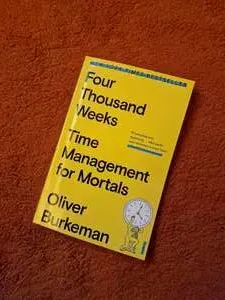
Four Thousand Weeks
Summary
Oliver Burkeman confronts our productivity obsession with a startling premise: the average human lifespan is 4000 weeks. This anti-time-management manifesto argues that conventional efficiency approaches backfire by increasing anxiety. Instead, we must embrace "cosmic insignificance therapy" - finding freedom in accepting our limited time through three principles: 1) Pay yourself first with meaningful work 2) Limit work-in-progress 3) Resist middling priorities.
Blending philosophy (Heidegger, Seneca) with modern psychology, Burkeman shows how surrendering to finitude paradoxically creates space for what matters. The book challenges productivity culture's false promise that we can "do it all" if we optimize enough.
Key Takeaways
1. The Efficiency Trap
Trying to clear more tasks creates more tasks - focus instead on strategic neglect
2. Cosmic Insignificance Therapy
Find liberation in accepting your limited impact on the vast timeline of existence
3. Patron Saint Principle
Choose 3-4 "saints" (mentors) to guide priorities when overwhelmed
4. Sequential Living
Embrace doing one thing at a time in proper sequence rather than multitasking
5. Productivity as Moral License
Recognize using busyness to avoid hard existential questions about meaning
Favorite Quotes
Personal Reflection
Implementing "strategic neglect" reduced my task list by 60% while increasing meaningful output. Adopting sequential living helped complete a 2-year writing project in 6 months. However, overcoming productivity guilt required deleting all task manager apps for 30 days - a detox revealing how tools drove anxiety more than progress.
The patron saint concept transformed decision-making - choosing Carl Jung, Mary Oliver, and Marcus Aurelius as guides created unexpected clarity. Two years later, I maintain a "4K Week" counter on my desk, a visceral reminder to invest time rather than "spend" it.
Who Should Read This
Essential for:
- Productivity system addicts
- Perfectionists struggling with completion
- Leaders facing decision fatigue
- Existential philosophy enthusiasts
- Anyone feeling trapped in "hustle culture"