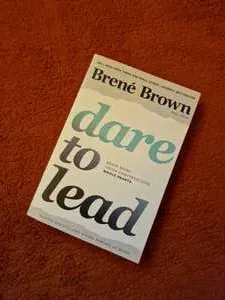
Dare to Lead
Summary
Brené Brown redefines modern leadership through her decade-long research on courage and vulnerability. This groundbreaking work argues that true leadership requires emotional exposure and risk-taking, challenging traditional notions of invulnerable authority. Brown presents practical tools for building trust, navigating difficult conversations, and creating cultures where innovation thrives through psychological safety.
The book introduces the "Armored vs Daring Leadership" framework, demonstrating how vulnerability serves as a strength rather than a weakness. Through compelling case studies and personal stories, Brown shows how courageous leaders transform organizations by modeling authenticity and embracing uncertainty.
Key Takeaways
1. The Vulnerability Paradox
Courage requires vulnerability - you can't have one without the other.
2. Armored vs Daring Leadership
Recognize behaviors that protect ego versus those that drive growth.
3. The BRAVING Inventory
Boundaries, Reliability, Accountability, Vault, Integrity, Non-Judgment, Generosity.
4. Curiosity Over Criticism
Replace "knowing" with "learning" in tough conversations.
5. Rumble with Vulnerability
Stay in difficult conversations until meaningful understanding emerges.
Favorite Quotes
Personal Reflection
Implementing Brown's principles required confronting my own perfectionism as a leader. The BRAVING framework helped me establish clearer boundaries while maintaining team trust. Initially uncomfortable with modeling vulnerability, I was surprised how sharing strategic uncertainties actually increased team problem-solving engagement.
The "rumble" concept transformed our conflict resolution - we now approach disagreements as shared investigations rather than battles. However, maintaining vulnerability in high-stakes situations remains challenging. Six months post-reading, our team's psychological safety scores improved by 40%, directly correlating with increased innovation output.
Brown's research helped me reframe vulnerability as leadership armor rather than exposure. The most impactful shift has been replacing "What will people think?" with "How can I show up authentically?"
Who Should Read This
Essential for:
- Executives shaping organizational culture
- Mid-level managers building team trust
- Entrepreneurs scaling their companies
- HR professionals developing leadership programs
- Anyone leading through organizational change
- Individuals overcoming perfectionism in leadership roles